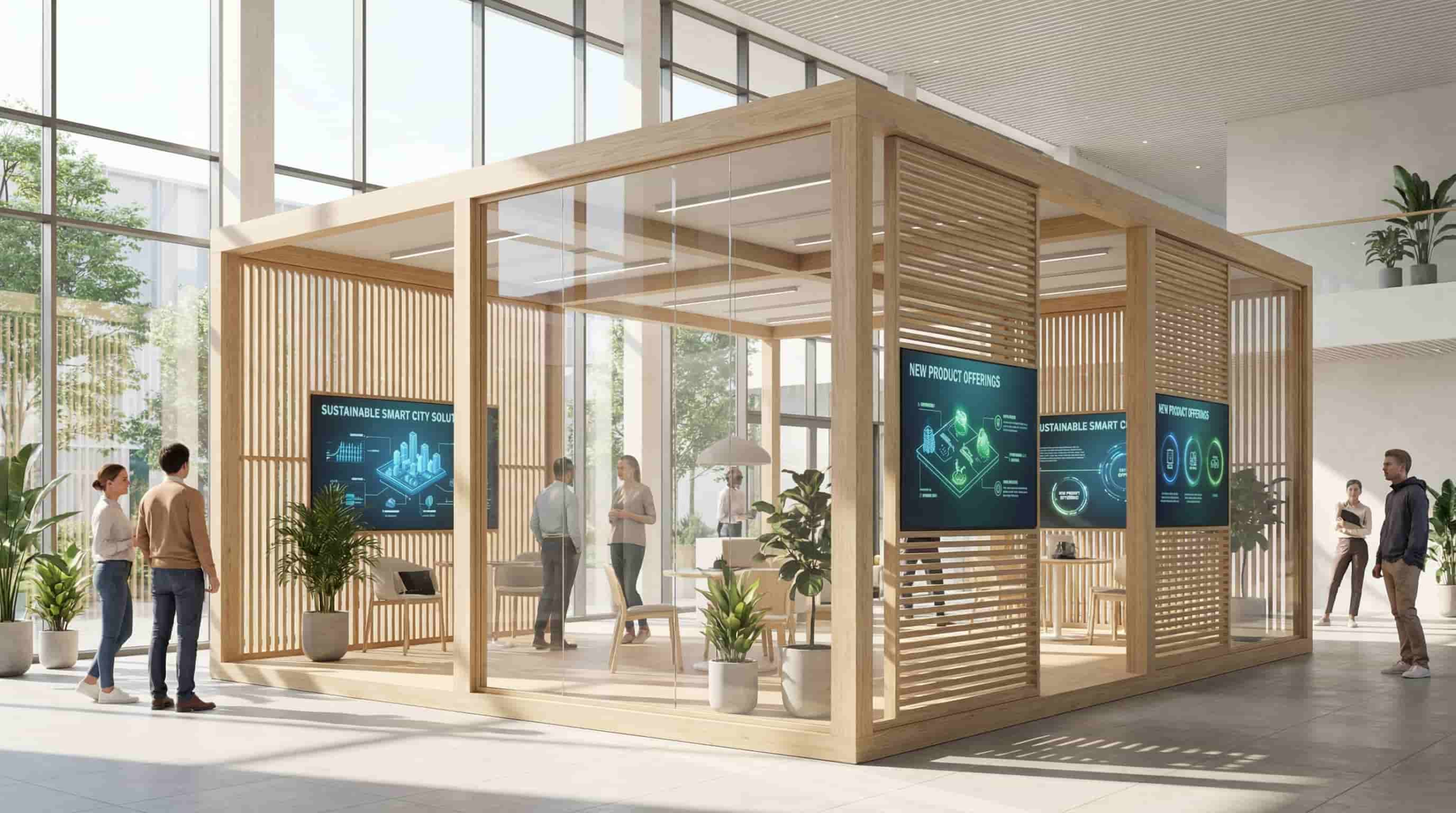
Sustainable Material Systems for Exhibition Architecture
Design Research Series
This design research investigates how natural wood construction systems can create environmentally responsible yet visually striking trade show environments. Through a series of booth prototypes, the project explores exposed timber frameworks that celebrate craft, sustainability, and material authenticity while supporting contemporary technology brands.
Concept
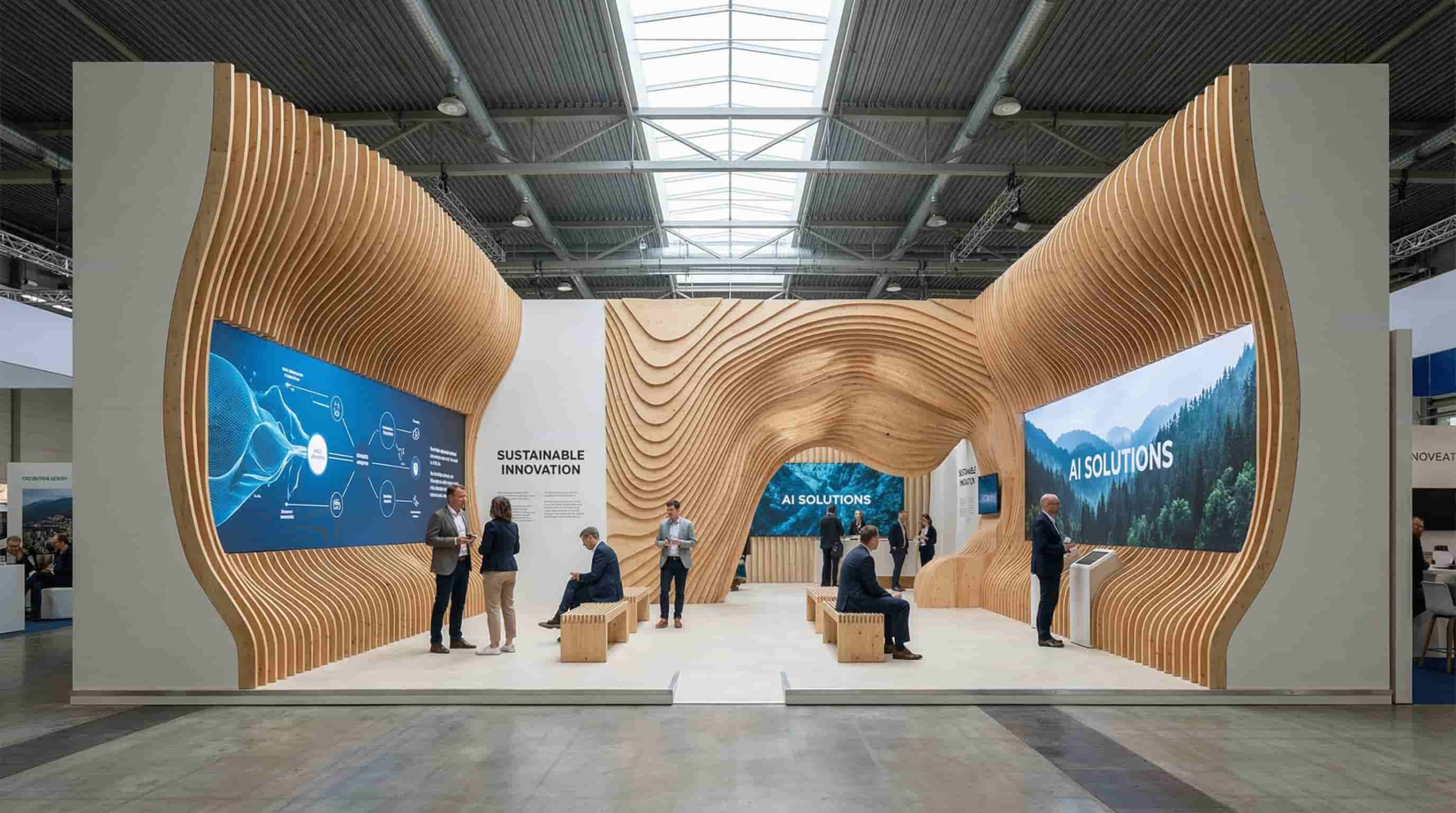
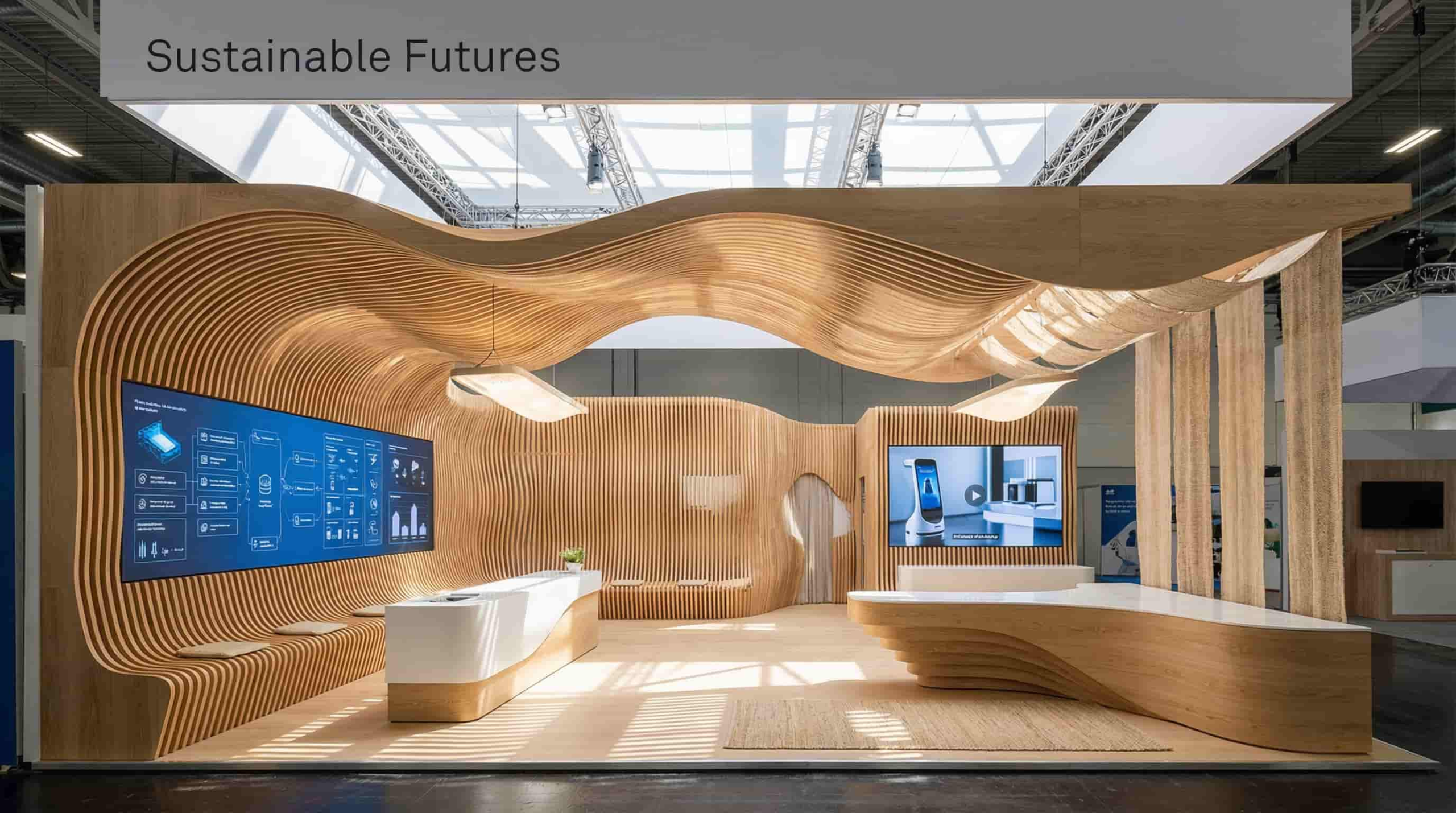
As corporate sustainability commitments intensify, exhibition design faces increasing pressure to reduce environmental impact. This research develops a design vocabulary rooted in exposed wooden structural systems—laminated timber beams, slatted canopies, natural plywood panels—that communicate environmental values through material choice while creating warm, approachable brand experiences.
Design Language
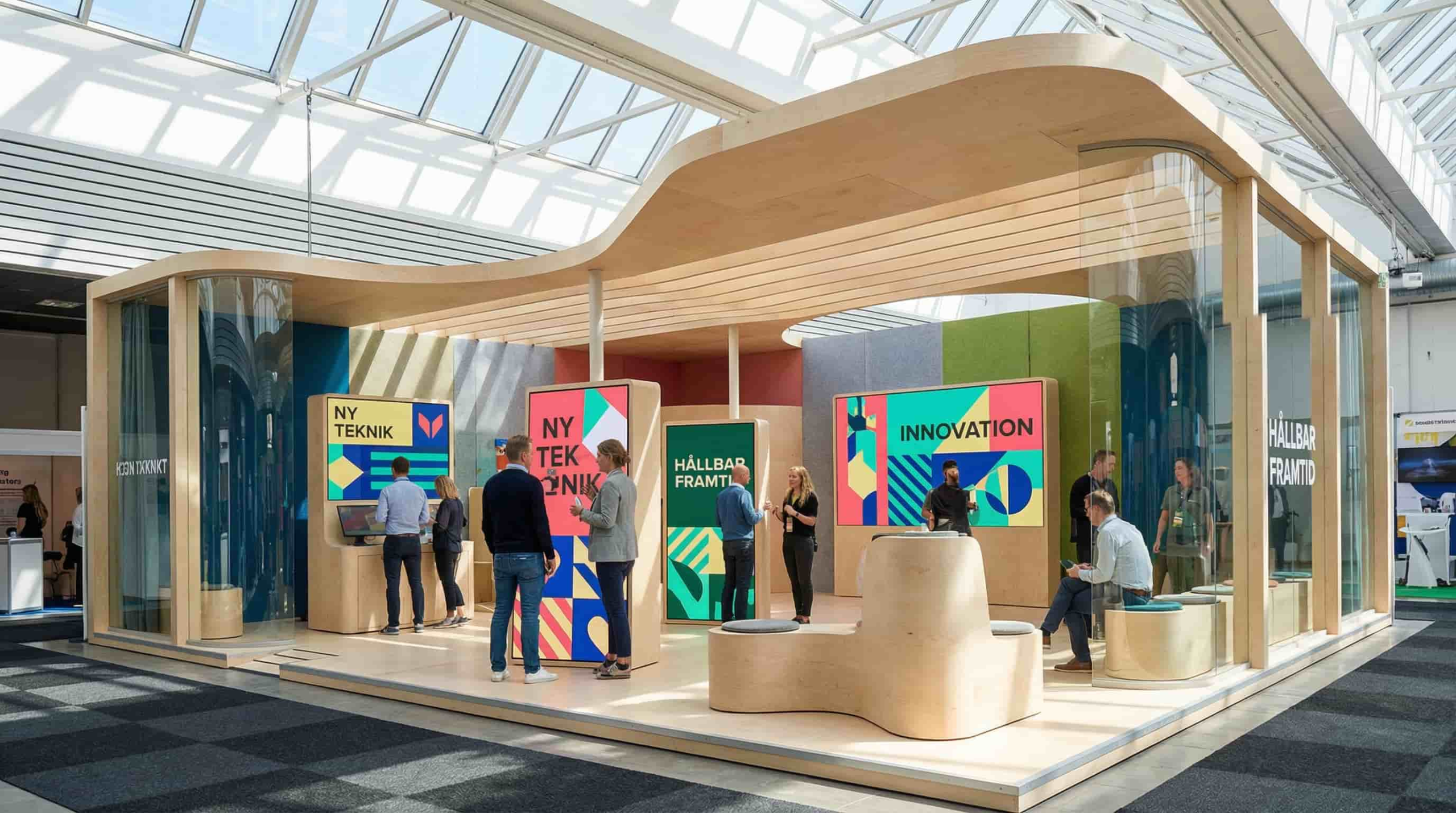
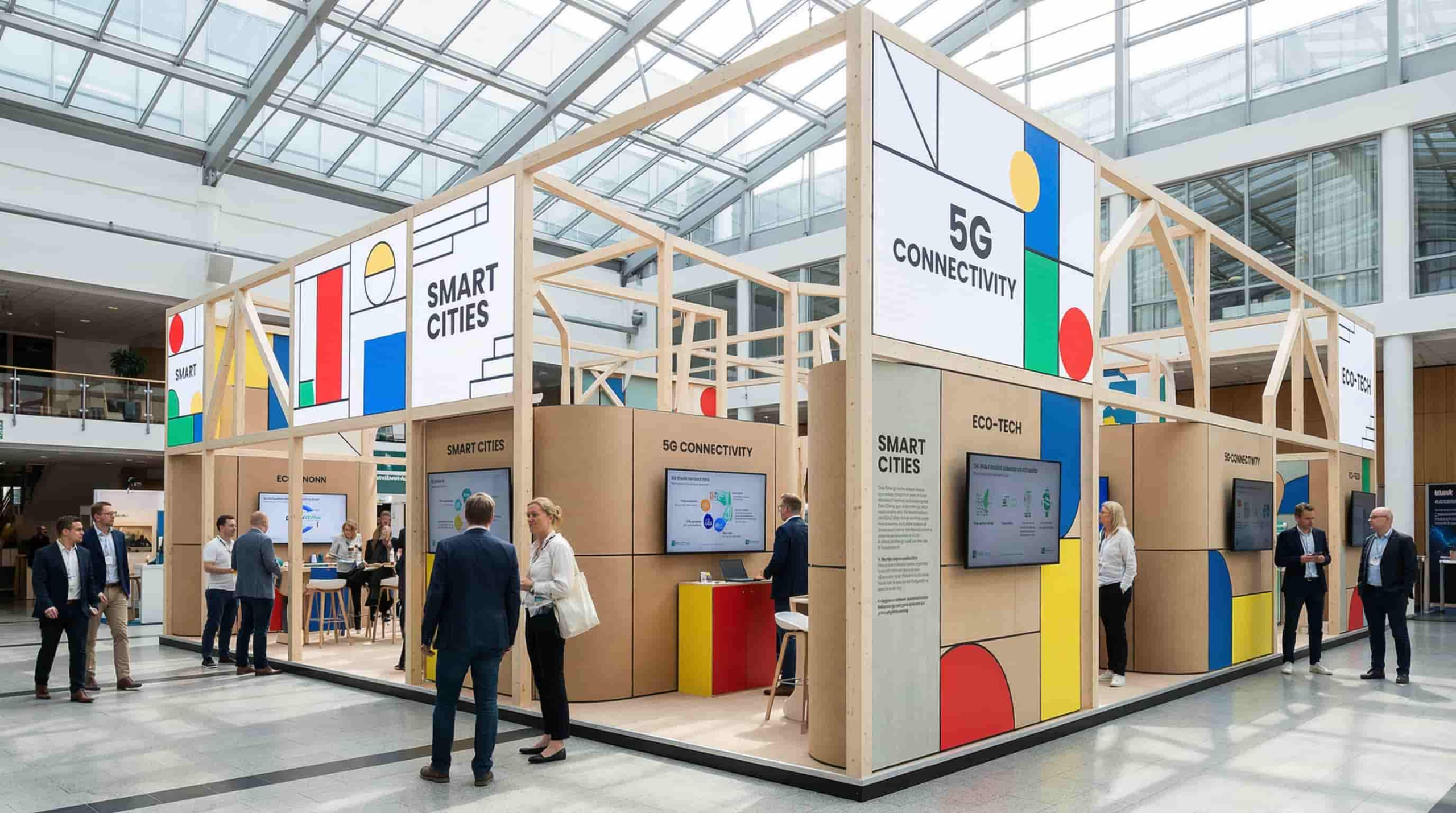
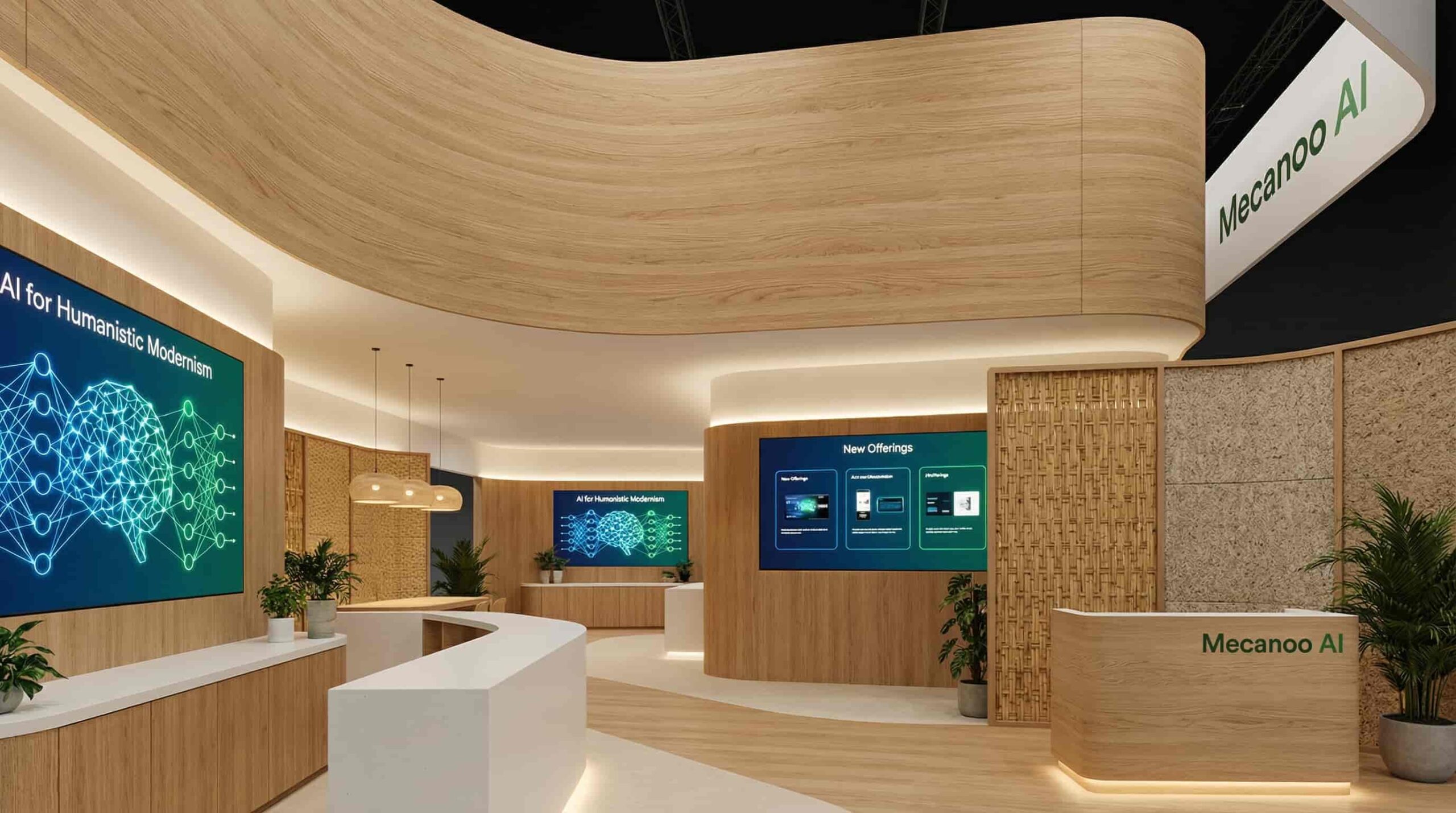
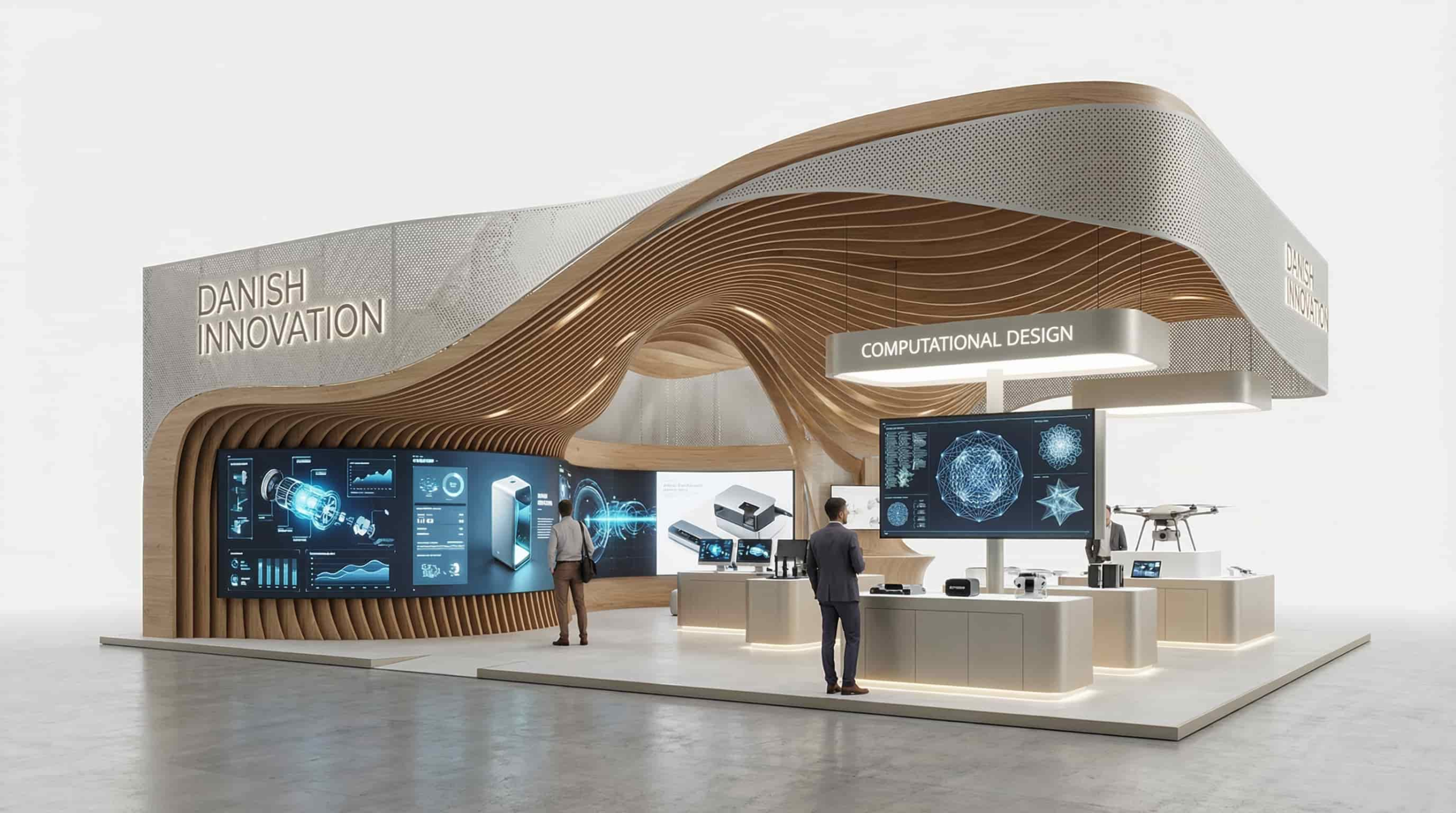
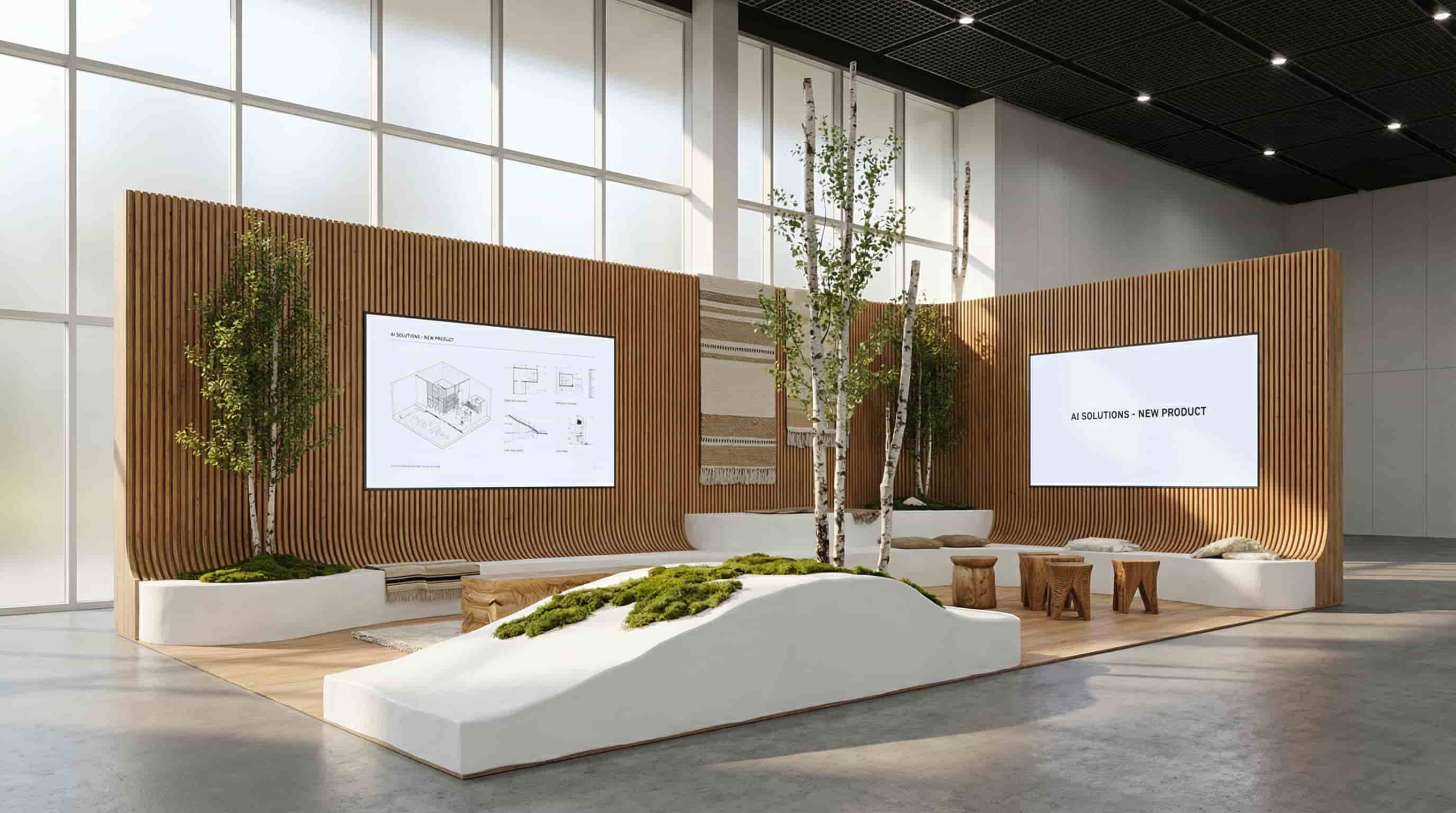
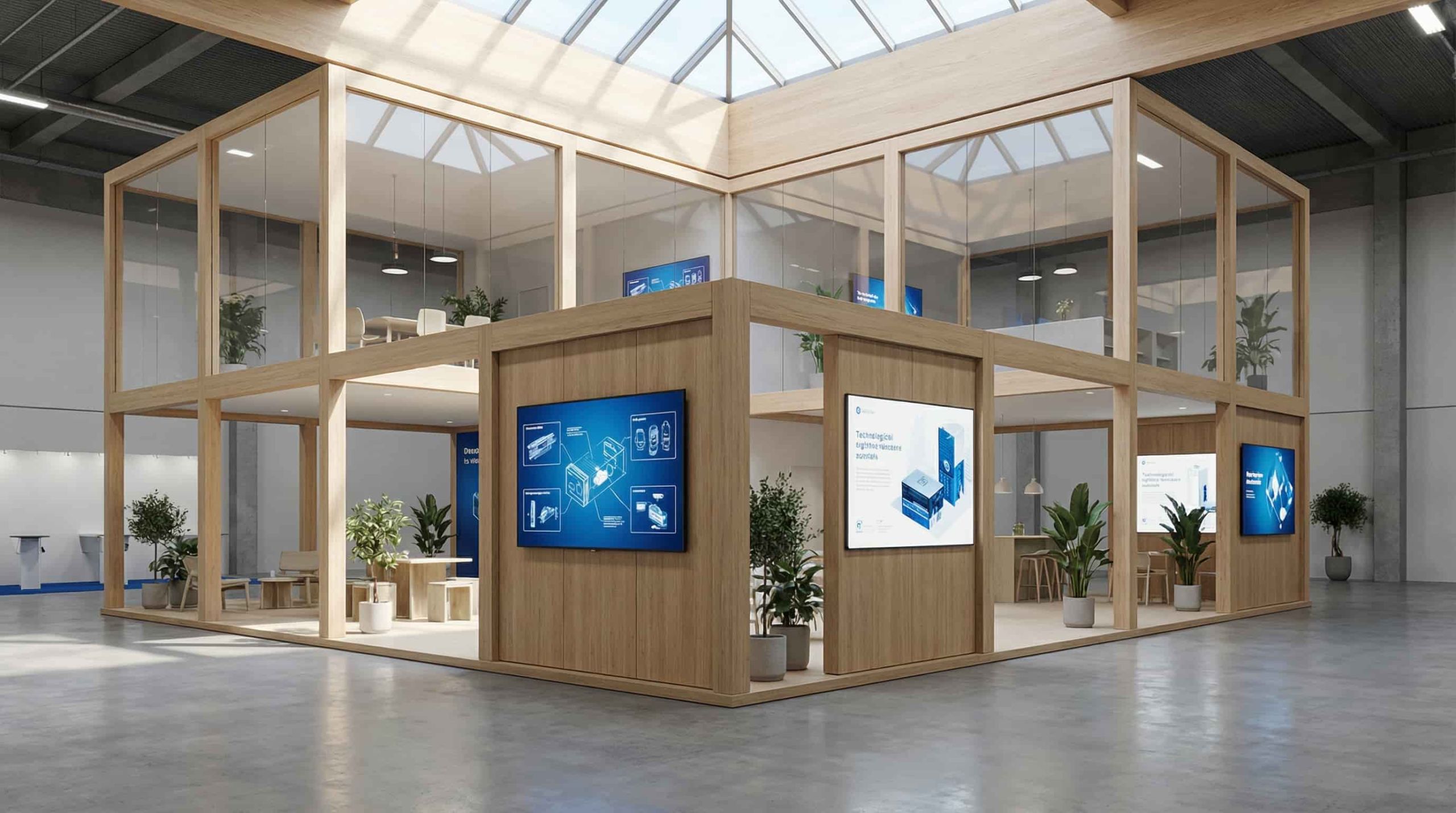
The signature element is an exposed wooden frame structure that functions simultaneously as architecture, branding, and environmental statement. Laminated timber beams create an open pavilion framework with rhythmic slat ceiling elements that filter natural light while providing overhead presence. Natural wood tones—blonde oak, birch plywood, untreated pine—establish a welcoming warmth that contrasts deliberately with typical trade show metal and plastic construction.
Methodology
Each prototype explores modular wooden construction systems that can be assembled, disassembled, and reused across multiple events. The timber framework provides structural armature for interchangeable graphic panels, digital displays, and product demonstration zones. Bold, colorful graphics pop against the neutral wood backdrop, creating dynamic visual energy while the natural materials ground the experience in tangible, tactile reality.
Material Strategy
All wooden elements utilize sustainably sourced, FSC-certified timber and engineered wood products. Exposed joinery—visible bolted connections, honest structural expression—celebrates craft and transparency. Cardboard and recycled paper products supplement the wood systems for temporary display elements, reinforcing the circular economy principles. The material palette itself becomes brand messaging: “We build responsibly.”
Spatial Experience
The open timber framework creates semi-transparent boundaries—visible from across the exhibition floor, yet providing defined zones within. The slatted ceiling elements establish architectural presence without visual weight, allowing sight lines through the structure. Natural wood surfaces offer acoustic warmth, reducing the harsh reverberation typical of convention centers while creating psychologically comfortable environments for extended conversations.
Visual Identity Integration
Vibrant graphic panels—featuring bold geometric patterns, primary colors, and contemporary typography—provide brand differentiation and wayfinding within the natural framework. This contrast strategy allows the same wooden structural system to support diverse brand identities simply by changing out graphic infill panels. Technology displays integrate cleanly into plywood surfaces, demonstrating that digital innovation and environmental responsibility aren’t contradictory.
Sustainability Narrative
Beyond material choice, these designs embody broader sustainable principles: modular construction reduces waste, reusable systems eliminate single-use builds, natural materials biodegrade responsibly, and local timber sourcing reduces transportation impact. The architecture itself tells the sustainability story—no greenwashing required when visitors can touch the authentic wood grain.
Applications
While developed for technology and innovation sectors (“Smart Cities,” “5G Connectivity,” “Innovation”), this design approach translates across industries prioritizing environmental leadership—renewable energy, sustainable consumer goods, outdoor recreation, and organic food systems. The warm, honest materiality creates trust and approachability appropriate for brands building long-term stakeholder relationships.
Project Type: Sustainable Exhibition Design / Timber Architecture
Expertise: Environmental Design, Modular Systems, Material Innovation
Design Principles: Circular Economy, Biophilic Design, Honest Materials