Biomimetic Design Language for Automotive Brand Experiences
Design Research Series
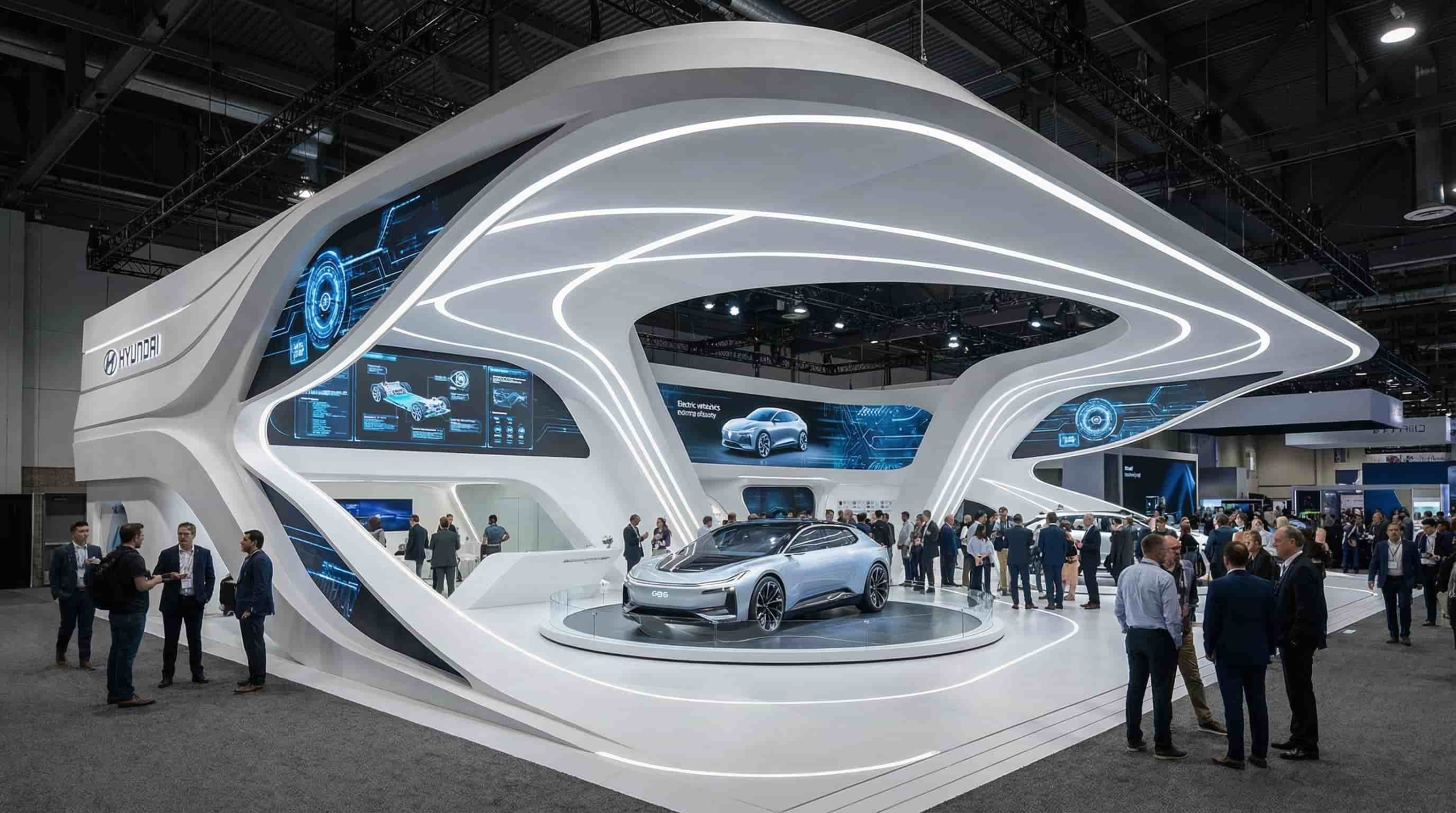
This design research explores how fluid, organic forms inspired by natural systems can create compelling environments for next-generation mobility brands. Through a series of automotive exhibition booth prototypes, the project investigates continuous sculptural surfaces that blur boundaries between architecture, product display, and digital storytelling.
Concept
Contemporary automotive brands—particularly electric and autonomous vehicle manufacturers—require spatial experiences that communicate innovation, sustainability, and forward-thinking design philosophy. This research develops a biomimetic design vocabulary where booth architecture itself becomes a visual metaphor for seamless technology, aerodynamic efficiency, and environmental harmony.
Design Language
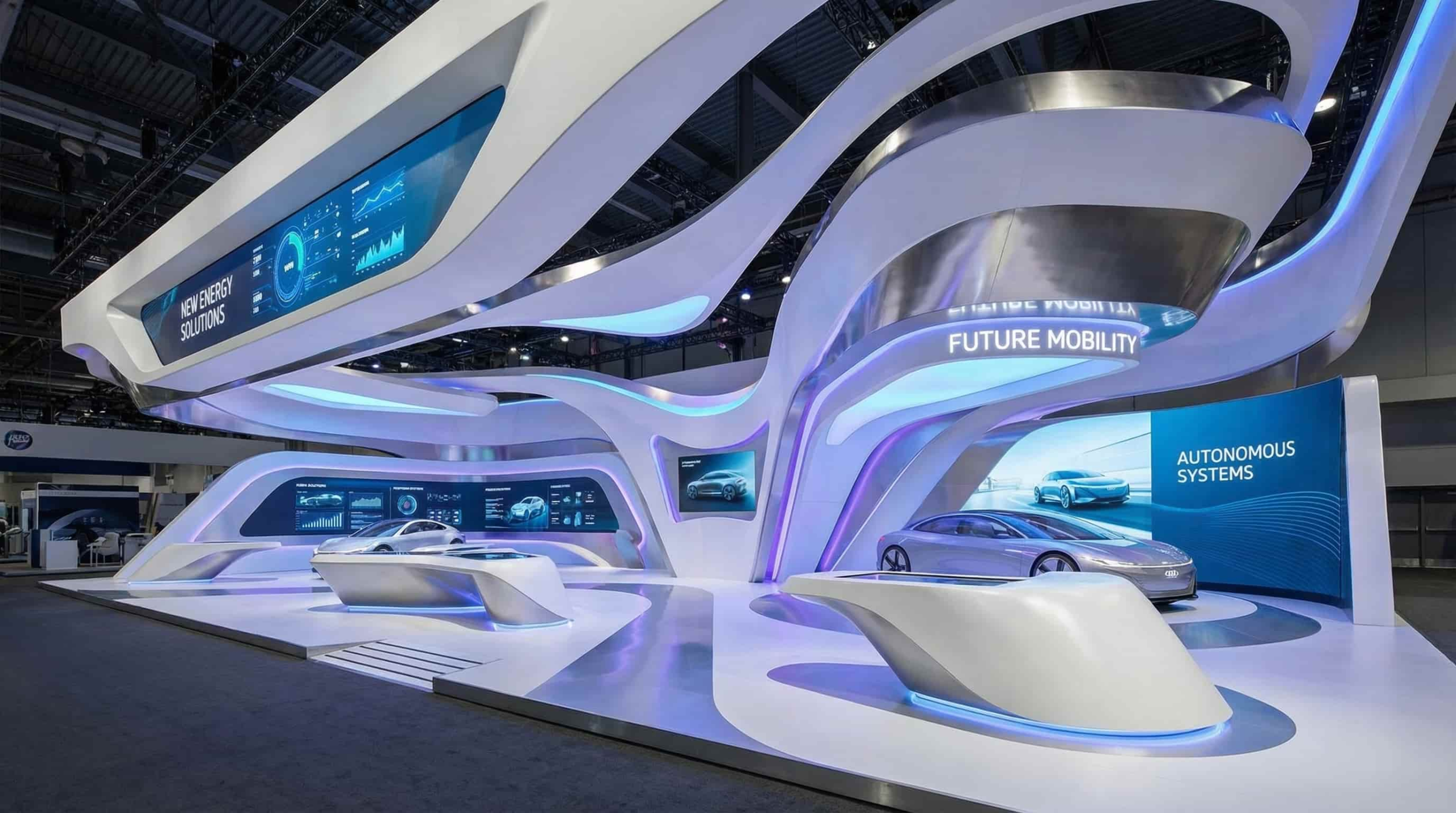
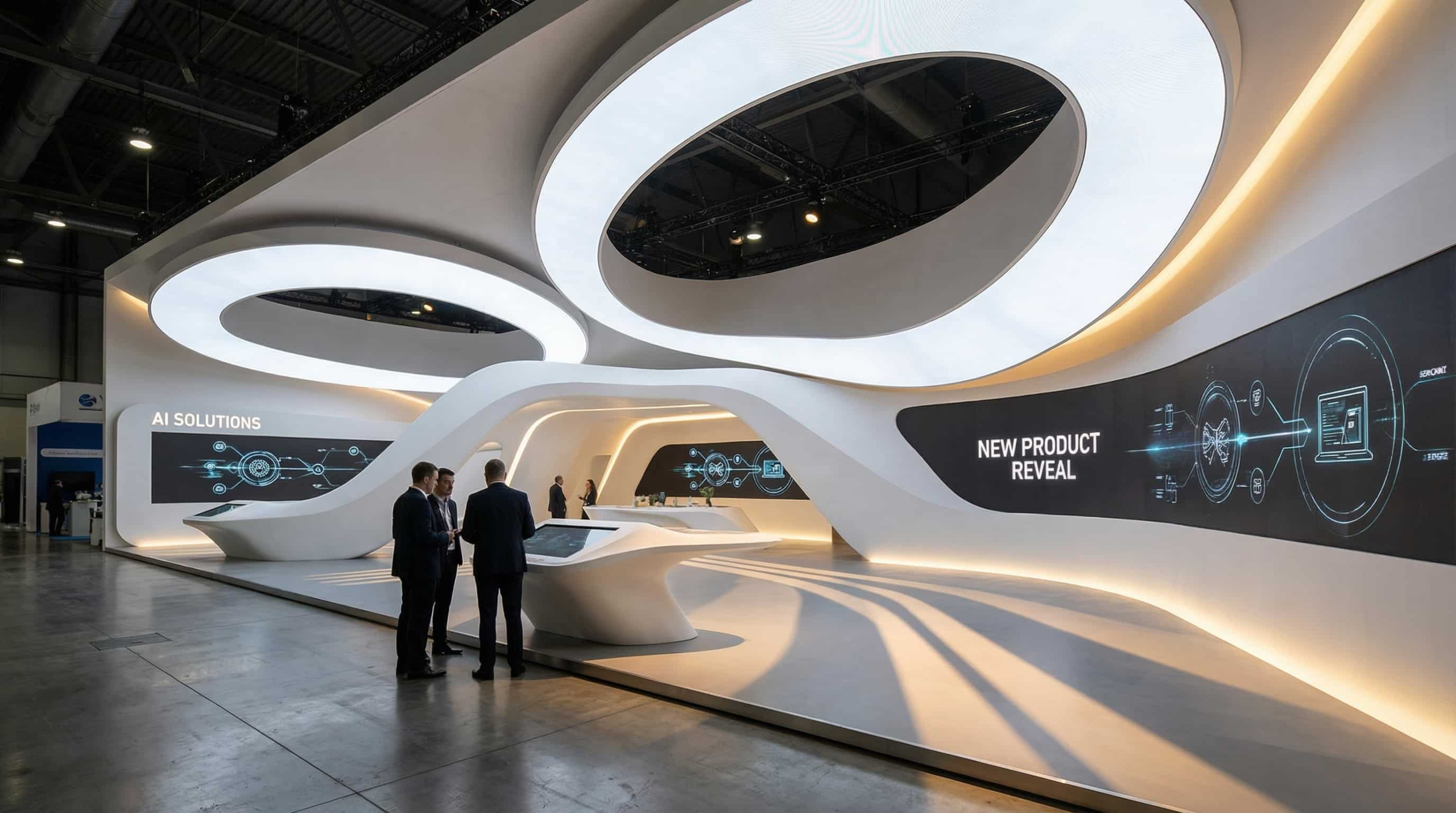
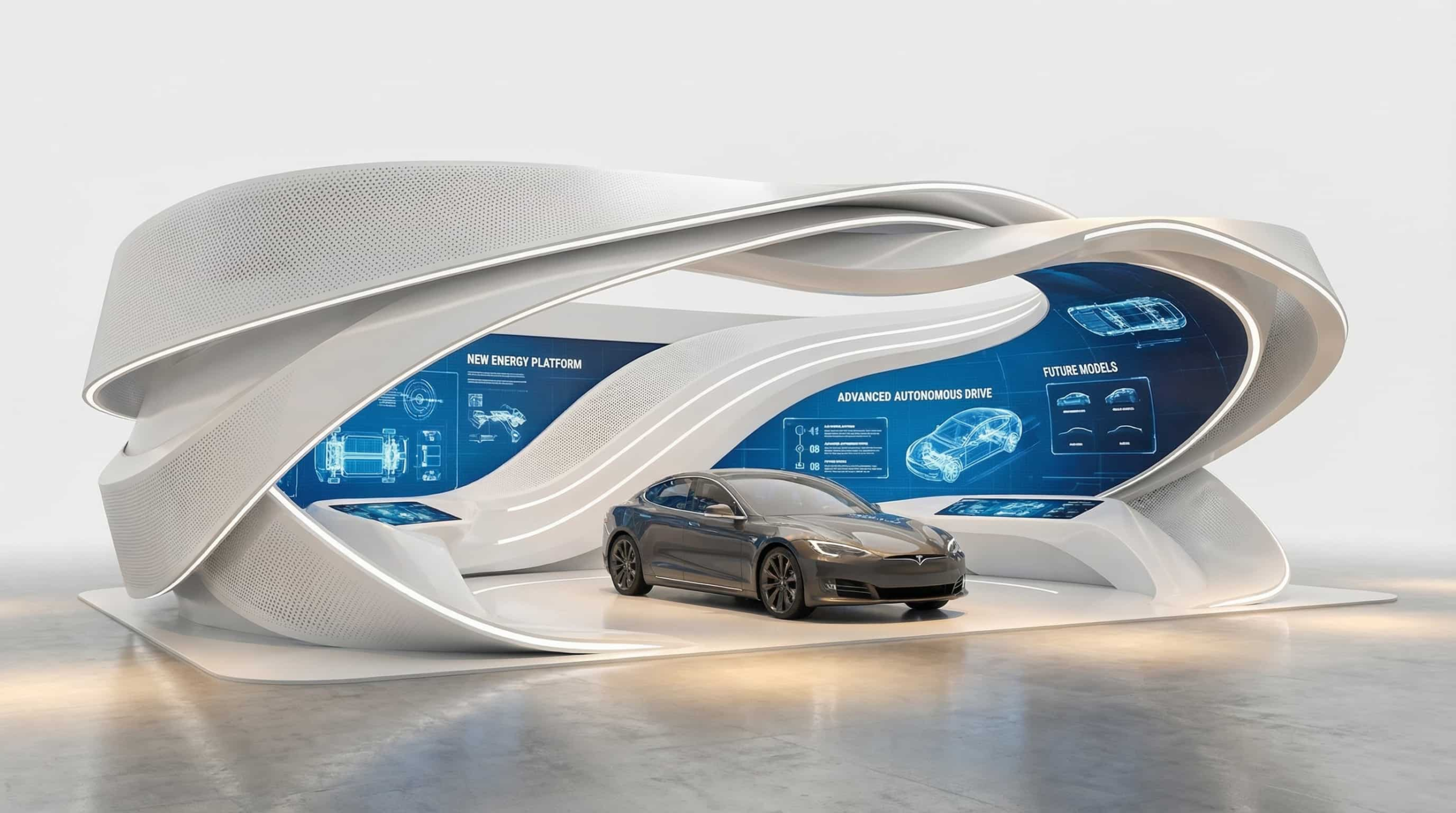
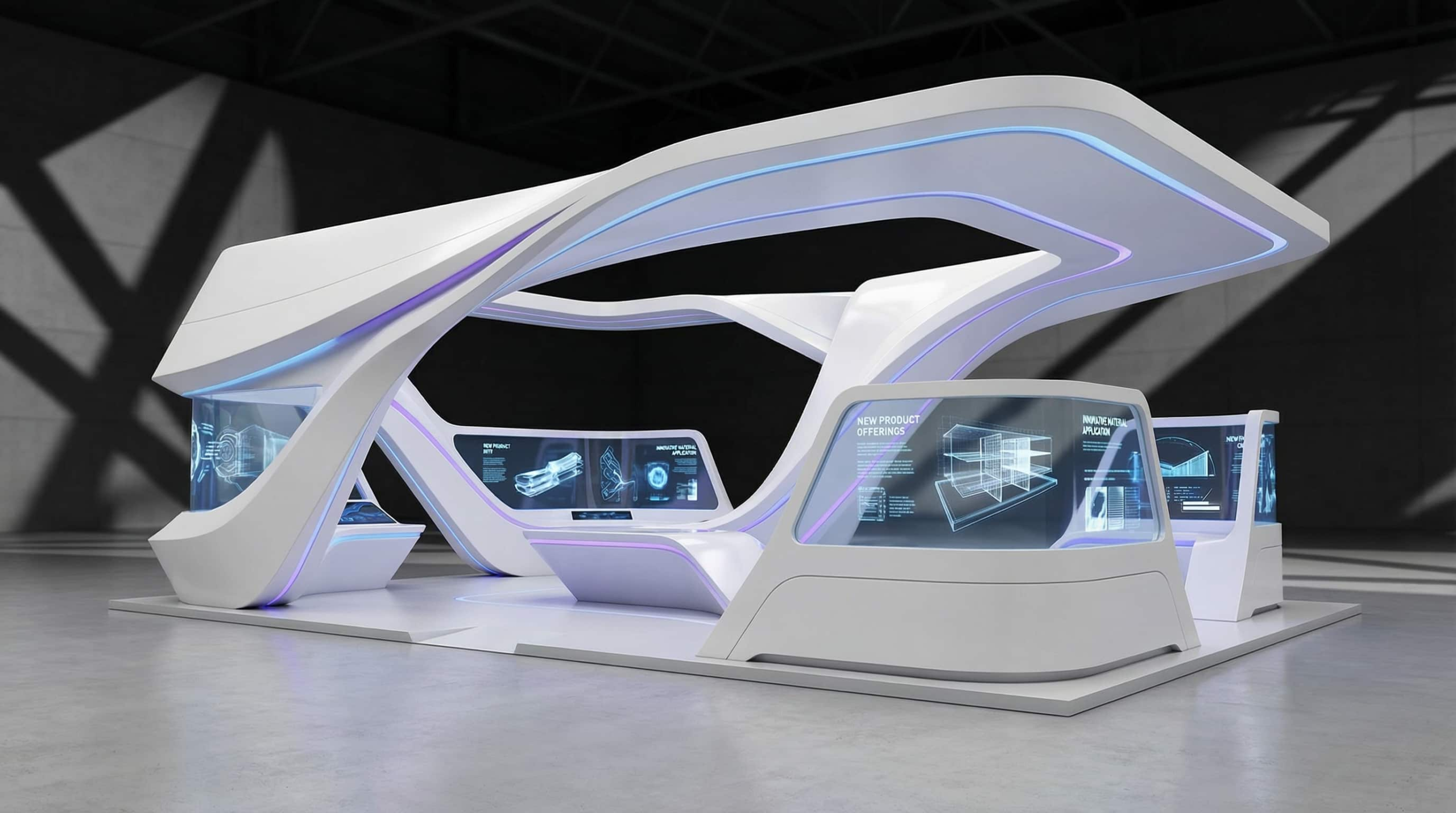
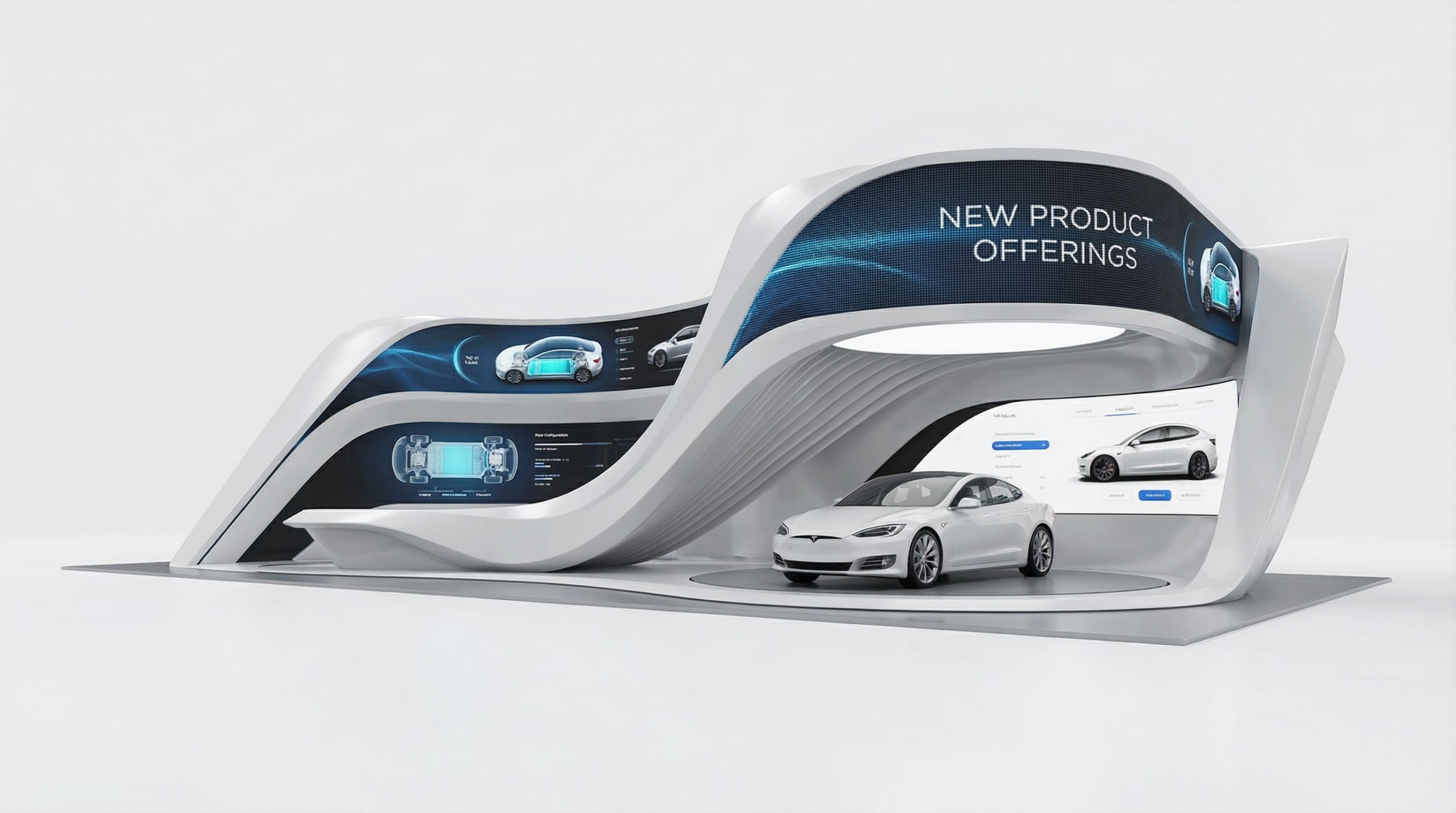
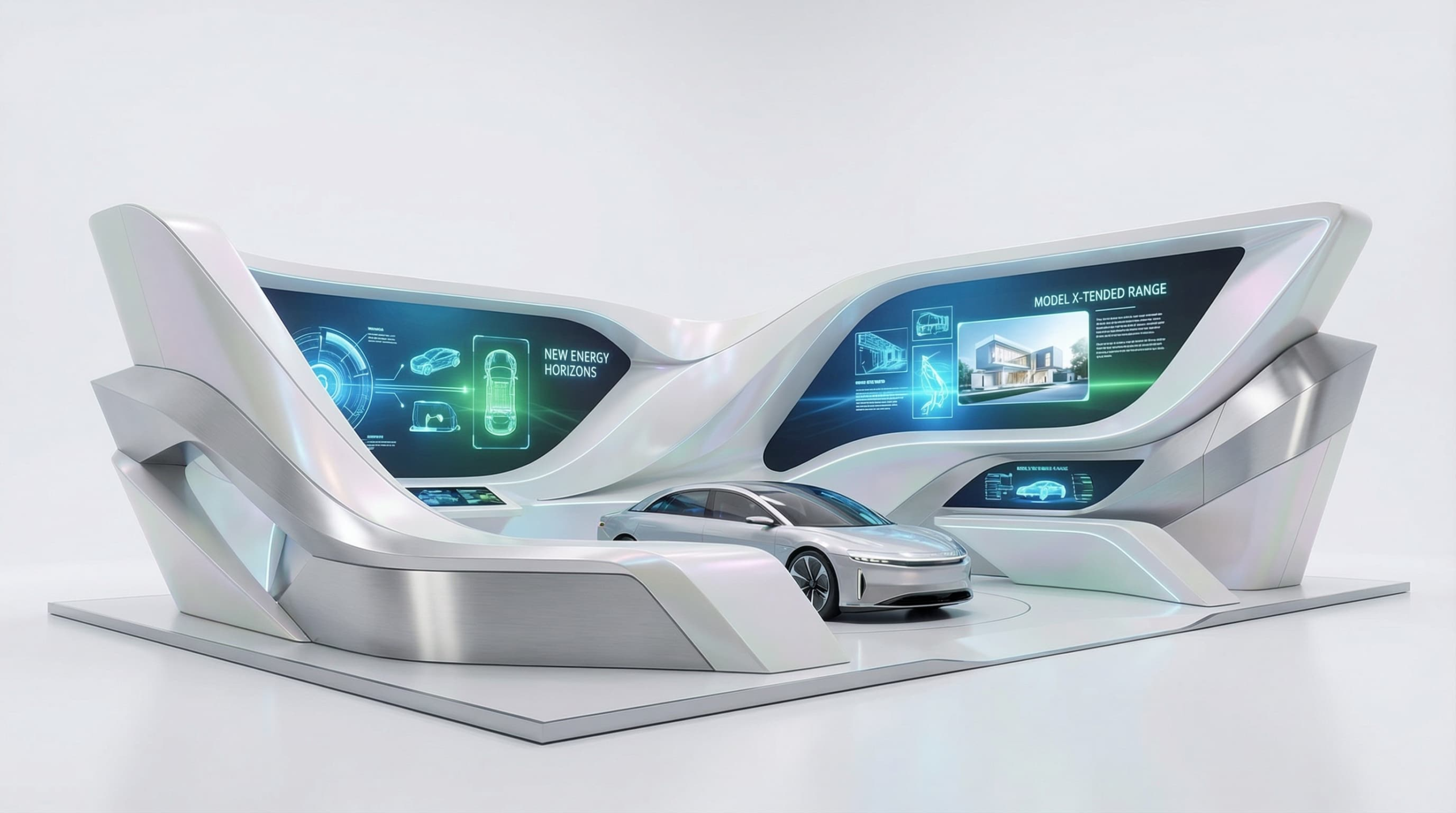
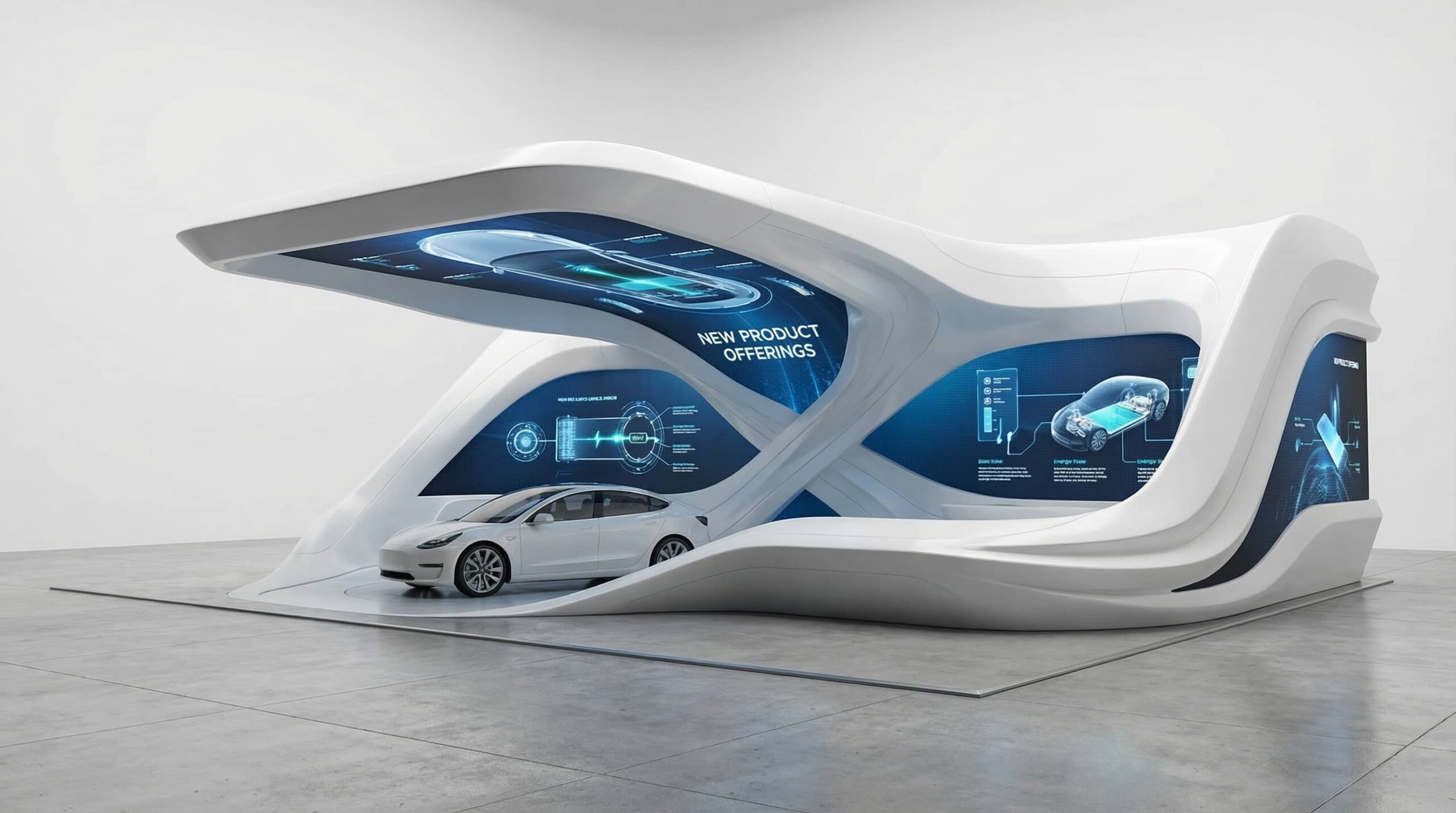
The signature element is a continuous ribbon-like structure that flows from floor to ceiling, creating dramatic canopy forms while defining functional zones below. These sculptural white surfaces fold and curve organically, forming integrated display platforms, digital screen housing, and overhead brand presence. LED edge lighting traces the flowing geometry, emphasizing the dynamic movement frozen in form.
Methodology
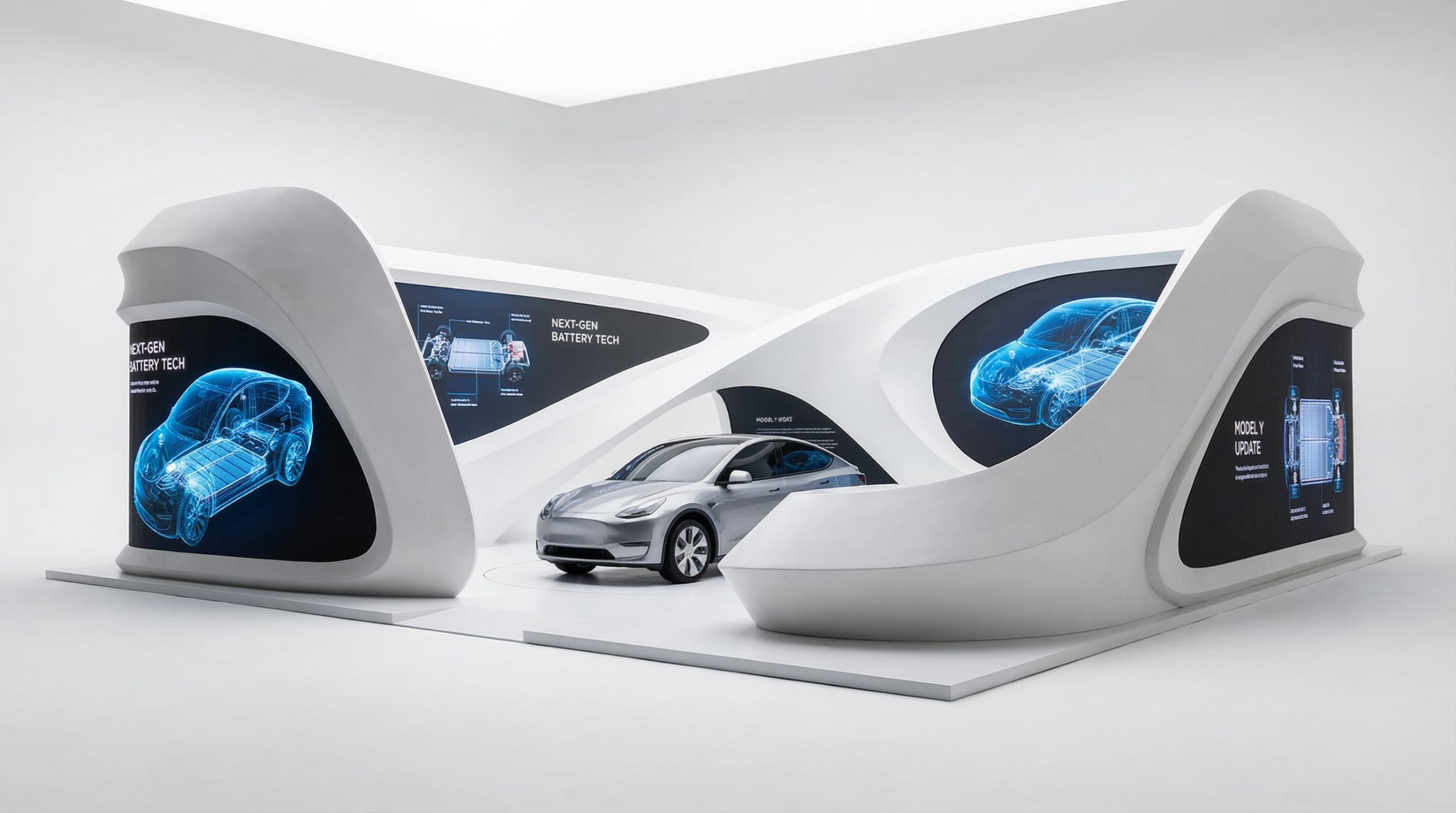
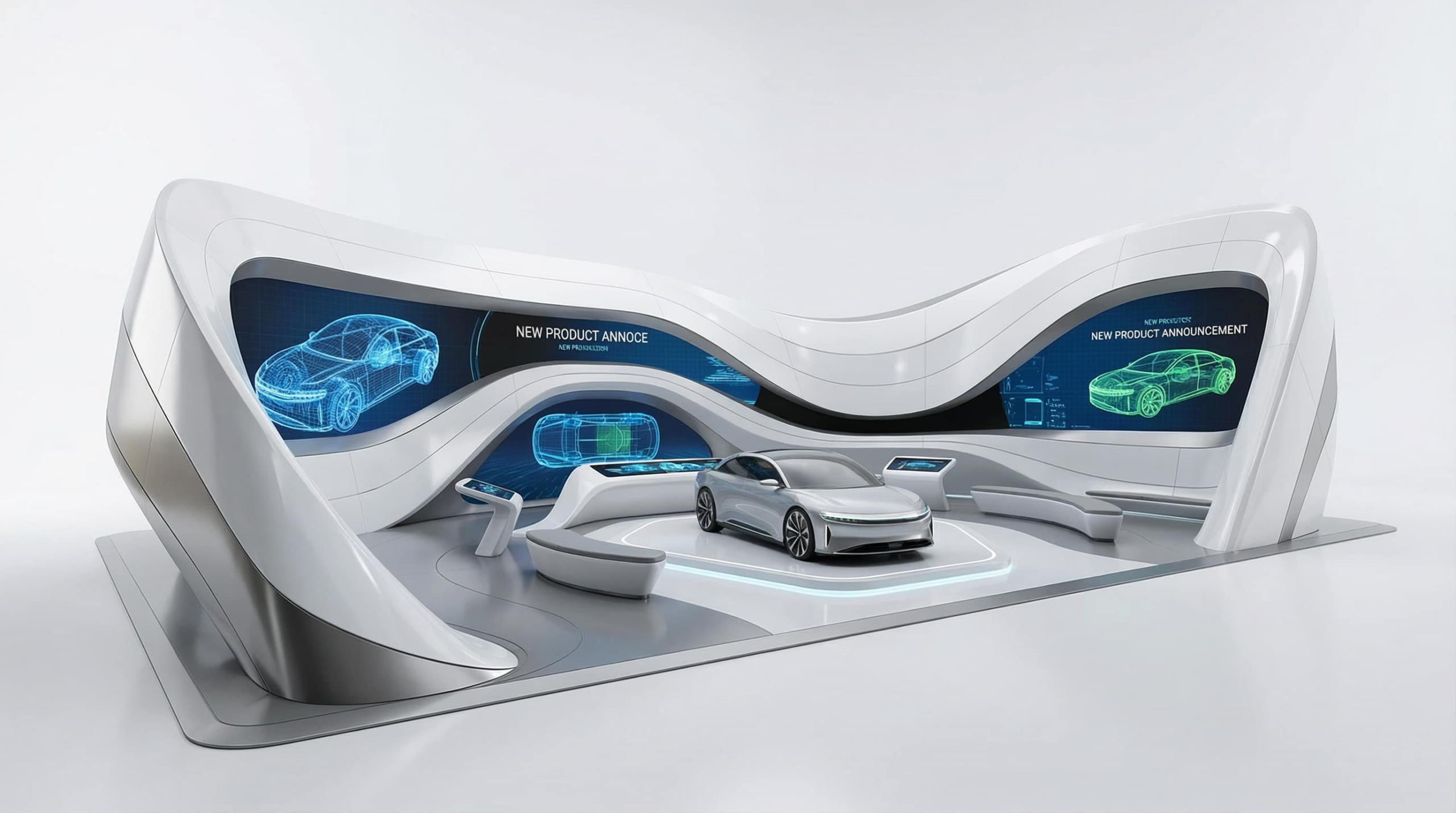
Each iteration explores how a single fluid gesture can organize complex exhibition requirements—vehicle display podiums, interactive technology zones, meeting areas, and circulation paths—all unified within one cohesive sculptural expression. The white monochromatic palette allows the organic geometry to read clearly while providing neutral backdrop for vehicle color and digital content.
Spatial Experience
Unlike conventional rectilinear booth structures, these organic forms create constantly shifting perspectives as visitors circulate. The flowing overhead canopies provide dramatic visibility across the exhibition hall while creating intimate, cave-like zones beneath. Digital screens integrate seamlessly into curved surfaces, displaying technical information, brand narratives, and product animations that reinforce the innovation-forward positioning.
Material Strategy
Smooth white composite surfaces suggest advanced manufacturing and digital fabrication capabilities—CNC milling, 3D printing, parametric modeling—technologies that parallel the automotive industry’s own production evolution. Integrated LED lighting transforms the static forms into dynamic brand beacons, with color-shifting capabilities allowing adaptation for different vehicle launches or brand moments.
Applications
While developed specifically for automotive contexts, this design language translates across mobility sectors—marine, aerospace, urban transportation systems—anywhere brands seek to communicate fluid innovation, sustainable thinking, and human-centered technology. The organic vocabulary feels simultaneously futuristic and familiar, technical yet approachable.
Design Impact
This architectural approach elevates product presentation beyond traditional auto show conventions. Vehicles become sculptural objects displayed within equally sculptural environments, creating cohesive brand worlds where architecture and product speak the same design language of flowing surfaces, technological sophistication, and optimistic future vision.
Project Type: Design Research / Automotive Exhibition Architecture
Expertise: Experiential Design, Brand Environments, Parametric Modeling
Design Tools: 3D Modeling, Parametric Design, Architectural Visualization